
Clackery Journal
Are Mechanical Keyboards Worth It? A Beginner's Guide To Feel, Sound, and Switches
A beginner-friendly look at why mechanical keyboards have become popular, how they differ from regular keyboards, and why the buying experience in the UAE still needs to improve.
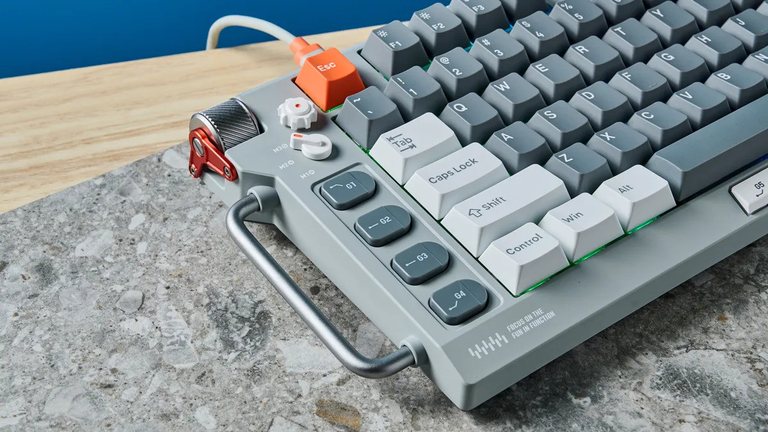
The gaming community on YouTube is having a hoot, and that is understandably so. If you have ever found yourself down the rabbit hole of game walkthroughs, gaming setups, keyboard sound tests, and gamers chilling on livestreams, you have sensed that gaming content is a big business. That's because it's ceaselessly influential.
A lot of big names in the streaming world started their careers with a camera pointing at their faces and a game loaded on their computer screens. Today, there are millions of people who not only follow gaming streamers like Richard Tyler Blevins, popularly known as Ninja, or Darren Watkins Jr., popularly known as iShowSpeed, but also adopt their quirks, mannerisms, setups, and even the products they use.
That is some influence.
One of the products that is inconspicuously enjoying the fruits of such influence is the keyboard, specifically the mechanical keyboard.
The mechanical keyboard market was valued at around $1.8 billion in 2025 and is expected to grow to around $2.04 billion in 2026, according to Research and Markets. By 2030, the market is forecast to grow further, with some reports projecting continued growth at around 6% CAGR during the 2025 to 2030 period.
But why?
Well, it is due to a range of factors, including the rise in gaming, the growth of work-from-home setups, the popularity of personalized desk setups, and the fact that more people are now spending long hours in front of their computers. When a person is spending hours every day at a desk, the tools on that desk start to matter more.
A keyboard was once just a keyboard. For many people, it was the free accessory that came in the box with a computer. However, when you start working, gaming, typing, coding, designing, studying, and messaging from the same desk every day, you start noticing the things you touch the most.
The keyboard is one of those things.
Why specifically mechanical keyboards though?
Mechanical keyboards offer a better sense of tactility and responsiveness beneath your fingers. On many mechanical keyboards, you do not need to press the key all the way down for it to register. The keypress can register at a certain point during the press, depending on the switch, and that gives the keyboard a more controlled feel.
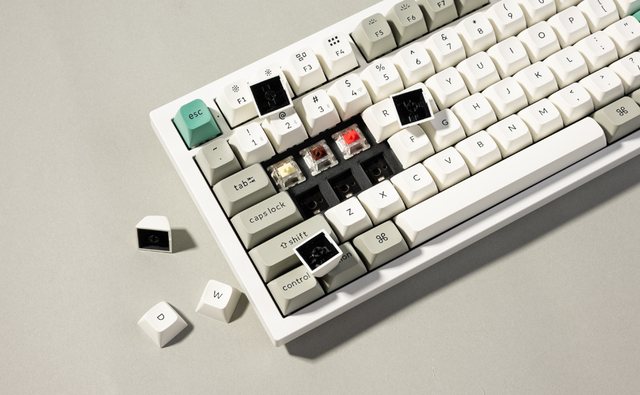
On top of that, mechanical keyboards are vastly customizable, which agrees with the whole concept of making your own setup. You can change the switches, keycaps, case, sound profile, layout, and sometimes even the internal parts of the keyboard. This level of control is part of why mechanical keyboards have become so popular among people who care about their desk setup.
That said, I recently purchased my own mechanical keyboard here in the UAE, coming from the summit of excitement after watching countless videos on mechanical keyboards. However, the process was less than satisfying. None of the keyboards that I had singled out were available to purchase, and there was no proper way to experience the keyboard before making a decision.
The only decent options I found were from big-name gaming brands, and while those keyboards are not bad, they do not always offer the same experience as keyboards from specialized keyboard brands.
That needs to change.
What makes a mechanical keyboard different?
Keyboards are supposed to be a means to an end, a tool used to get the job done. Why is it then that, after spending all day at work typing on a regular keyboard, I still look forward to typing on the mechanical keyboard I have at home?
It is mainly about the experience.
Unless you are into hyper-competitive esports, where latency and response time can actually matter, you might not immediately perceive a massive practical difference between a regular keyboard and a mechanical keyboard. You will not suddenly become a much faster typist, and a mechanical keyboard will not magically make you better at gaming.
However, the difference becomes obvious when you pay attention to how the keyboard feels.
The most obvious change you notice once you switch to a mechanical keyboard is that it usually feels more tactile and deliberate than a membrane keyboard. The keys often have more travel, the press feels more defined, and there is a clearer sense of what your fingers are doing. This can make typing feel more satisfying, although it may also take some time to adjust if you are coming from a laptop keyboard or a regular office keyboard.
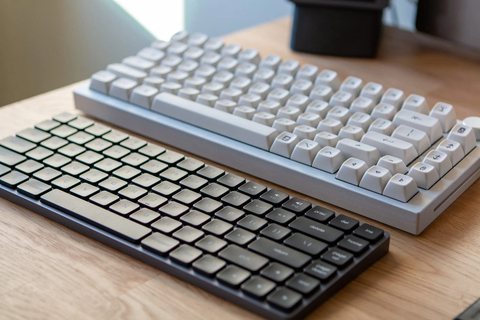
Regular keyboards are often membrane keyboards. They use a pressure-sensitive rubber or silicone sheet underneath the keys. When you press a key, it pushes down on that membrane and registers the keystroke. This is why many membrane keyboards feel soft, mushy, or slightly uncertain, although this is obviously not true for every membrane keyboard.
Mechanical keyboards, on the other hand, have a dedicated physical switch underneath each key. Each switch has its own spring and mechanism, and that switch is responsible for a large part of the keyboard’s feel, sound, actuation force, and typing experience.
The switch is also one of the main reasons why all mechanical keyboards do not sound the same. There are many kinds of switches, starting from popular options like Cherry MX Browns to newer Hall Effect switches that have become popular in gaming keyboards. Hall Effect keyboards use magnetic sensing, and they can support features like adjustable actuation and Rapid Trigger, which can be useful in fast-paced competitive games.
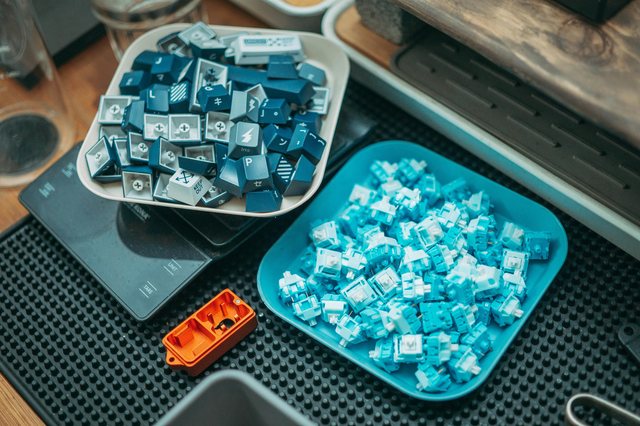
Aside from that, there is usually very limited customizability with membrane keyboards, while many mechanical keyboards are designed to be modified. You can customize a mechanical keyboard to a point where, after a round of changes, it may feel and sound very different from the keyboard you originally bought.
There are blogs, subreddits, YouTube channels, and online forums dedicated to discussing switches, keycaps, stabilizers, foam, plates, layouts, and keyboard sound. Custom keycaps themselves are a proper business, and many people buy them as gifts or collector items.
There are even long blog posts and videos dedicated only to lubricating keyboard switches, which tells you how deep this hobby can go.
Mechanical Keyboards vs Regular Keyboards
Let us list some differences between mechanical keyboards and membrane keyboards in terms of feel, customization, sound, durability, pricing, and everyday use.
Feel
Many membrane keyboards feel soft or mushy because of the rubber membrane underneath the keys. In many cases, you need to press the key down far enough for the membrane to make proper contact and register the keypress. This does not mean membrane keyboards are useless, because they are affordable, widely available, and good enough for many people. However, the typing feel is usually not the main reason someone buys a membrane keyboard.
Mechanical keyboards are different because they are built around switches. The switch decides a lot about how the keyboard feels. Some switches feel smooth from top to bottom, some have a small bump during the keypress, and some make a click sound when pressed.
Mechanical switches are usually grouped into three broad categories: linear, tactile, and clicky. Linear switches feel smooth when pressed. Tactile switches have a bump that gives your fingers feedback. Clicky switches have that bump along with a clicking sound.
This is where mechanical keyboards become interesting. Two keyboards can look similar from the outside, but if they use different switches, they can feel completely different when you type on them.
If your workflow includes long sprints of programming, writing, accounting, studying, gaming, or general office work, the feel of the keyboard can matter more than you think. It may not make you faster right away, but it can make typing feel more enjoyable and controlled.
Customization
There is a common misconception that membrane keyboards cannot be customized at all. They can be customized to some extent, but the options are usually limited. You may be able to change the keycaps on some models, and you may be able to change the outer casing in rare cases, but most of the changes are cosmetic.
With a mechanical keyboard, you can go much further. You can change the switches, keycaps, casing, sound dampening, stabilizers, and sometimes even the plate inside the keyboard. That means you are not only changing how the keyboard looks, but also how it feels and sounds.
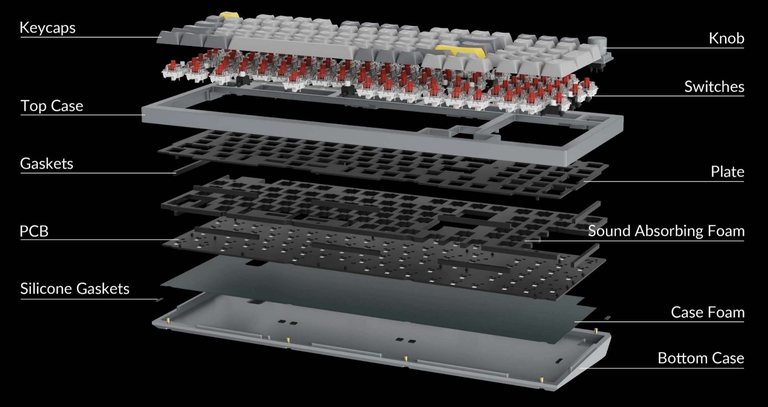
This is one of the biggest reasons mechanical keyboards have become a hobby. People do not only buy them for typing; they buy them because they can make the keyboard feel personal.
A person may start with a normal prebuilt keyboard and then slowly change the keycaps, try a different switch, add foam, tune the stabilizers, or move to a completely different layout. The keyboard becomes something that can be improved over time rather than something that is used until it breaks.
This level of customization is also why there is so much content around mechanical keyboards. People make videos comparing switches, recording keyboard sound tests, reviewing keycap profiles, and showing complete keyboard builds from start to finish.
Sound
People have different preferences about how a keyboard should sound, and that preference is also highly influenced by where the keyboard is being used.
One of the reasons people buy mechanical keyboards is because they enjoy the sound they make while typing. At the same time, keyboard sound is highly subjective. What sounds satisfying to one person may sound annoying to another person sitting nearby.
Compared to membrane keyboards, mechanical keyboards are often louder, although this depends heavily on the switch, case, keycaps, desk surface, and internal dampening. A clicky switch can be very loud, while a silent linear or silent tactile switch can be much more office-friendly.
Mechanical keyboards also have different sound profiles, and the community has given those sound profiles names based on how they are perceived. For instance, the mechanical keyboard I am typing on right now sounds “thocky,” while some other keyboards may sound “creamy” or “clacky.”
These are not scientific terms, but they are commonly used in the keyboard community. A thocky keyboard usually refers to a deeper and fuller sound. A creamy keyboard usually refers to a smoother and softer sound. A clacky keyboard usually refers to a sharper and higher-pitched sound.
While you might enjoy the audible feedback, the people around you may not enjoy the constant clacking. This is one of the main reasons mechanical keyboards are not as common in offices as regular keyboards.
The good thing is that you are not always stuck with one sound. If your keyboard is too loud and supports hot-swappable switches, you may be able to replace the switches with quieter ones. You can also change the keycaps, add foam, or modify the stabilizers to change how the keyboard sounds.
With most membrane keyboards, you are usually stuck with the sound and feel that came from the factory.
It is also worth noting that switches are not the only component that contributes to a keyboard’s sound profile. The casing, plate, stabilizers, foam, keycaps, desk mat, and even the table underneath can affect how a keyboard sounds.
This is why a keyboard may sound excellent in a YouTube video but feel or sound different when it is sitting on your own desk.
Durability
When it comes to durability, mechanical keyboards usually have an advantage. Mechanical switches are often rated for tens of millions of keystrokes, and some Cherry MX switches are designed to last up to 100 million actuations per key.
RTINGS also notes that mechanical keyboards typically have a durability advantage over membrane keyboards, although actual lifespan depends on more than just the switch. The case, PCB, stabilizers, solder joints, sockets, and general build quality also matter.
This is an important point because it is easy to assume that every mechanical keyboard is automatically durable. That is not true. A badly built mechanical keyboard can still develop issues, and a well-built membrane keyboard can still last for years.
The difference is that many mechanical keyboards are easier to repair or modify. If one switch stops working on a hot-swappable keyboard, you may be able to replace that switch instead of replacing the entire keyboard. If a stabilizer starts rattling, you may be able to tune or replace it. If the keycaps wear out, you can change them.
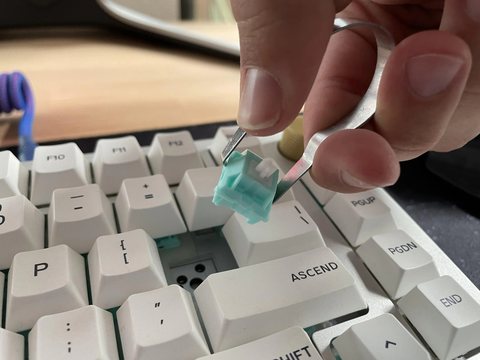
This repairability is part of the appeal. A mechanical keyboard is not always treated like a disposable accessory. In many cases, it is treated like a product that can be maintained, modified, and improved.
That said, mechanical keyboards are not faultless. Since they have more moving parts, you can still face issues like switch chatter, key wobble, stabilizer rattle, or inconsistent sound. However, the ability to open the keyboard and fix or improve parts of it makes a big difference.
Price
This is where mechanical keyboards lose some people.
A regular keyboard can be very cheap. You can walk into a store, pick up a keyboard, and it will do the job. It will let you type emails, fill forms, search Google, use Excel, and complain to customer support when a delivery is late.
A mechanical keyboard, on the other hand, can start at a reasonable price and then quickly become expensive. There are budget mechanical keyboards, mid-range keyboards, premium keyboards, custom keyboards, limited-run keycaps, artisan keycaps, custom cables, switch lubes, switch films, stabilizers, plates, foam kits, and many other accessories.
This is why the better question is not simply whether mechanical keyboards are better. The better question is whether you care enough about the typing experience to pay more for it.
For some people, the answer is no, and that is completely fair.
For others, the keyboard is something they use every day for hours. If you write, code, game, study, work with spreadsheets, or sit at a desk for long periods, the keyboard becomes one of the main tools you touch throughout the day. In that case, spending more on a better keyboard starts making more sense.
Gaming
Mechanical keyboards became popular in gaming for a reason.
They feel responsive, they offer a clearer keypress, and many models support features like N-key rollover, low latency, and faster-feeling inputs. RTINGS notes that mechanical keyboards can have advantages in areas like repairability, customization, NKRO, and latency, especially when compared with typical membrane keyboards.
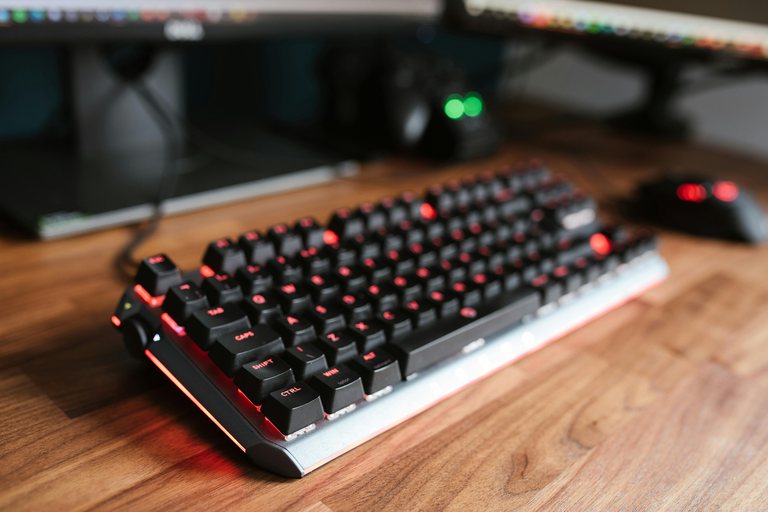
However, it is important not to exaggerate this point. A mechanical keyboard will not automatically make someone better at a game. Skill, practice, game sense, reaction time, and decision-making matter much more.
That said, better tools can make the experience smoother. If you play fast-paced games, the responsiveness and consistency of a mechanical keyboard can feel better. If you get into Hall Effect keyboards, features like adjustable actuation and Rapid Trigger can also matter in competitive games where movement and repeated key inputs are important.
For casual gaming, a decent keyboard is usually enough. For competitive gaming, the details start to matter more.
Typing and work
The quieter side of mechanical keyboards is not gaming. It is typing.
Programmers, writers, students, accountants, designers, and office workers type for hours, and most of them do it on whatever keyboard came with their laptop, office desktop, or monitor bundle.
A mechanical keyboard changes how typing feels. Every keypress can feel more deliberate, and depending on the switch you choose, the keyboard can give you a better sense of feedback while typing. This is why many people who buy mechanical keyboards for gaming eventually start appreciating them for normal work as well.
It is not that a mechanical keyboard suddenly makes typing effortless. You may even type slower for the first few days while adjusting to a different layout, switch type, or key height. However, once you get used to it, a good mechanical keyboard can make long typing sessions feel more enjoyable.
This is one of the reasons people get so particular about switches. A writer may prefer tactile switches because they provide feedback. A gamer may prefer linear switches because they feel smooth. Someone working in a shared office may prefer silent switches because they are less likely to annoy everyone nearby.
The right keyboard depends on the person using it.
Noise and office use
This is the part that deserves honesty.
Mechanical keyboards can be annoying in the wrong environment. The sound that feels satisfying to you may be irritating to someone sitting beside you. This is especially true in quiet offices, libraries, shared workspaces, or homes where other people are nearby.
If you are planning to use a mechanical keyboard in an office, it is better not to blindly buy a loud clicky keyboard. Blue-style clicky switches may sound fun at home, but in a quiet office they can quickly become a problem.
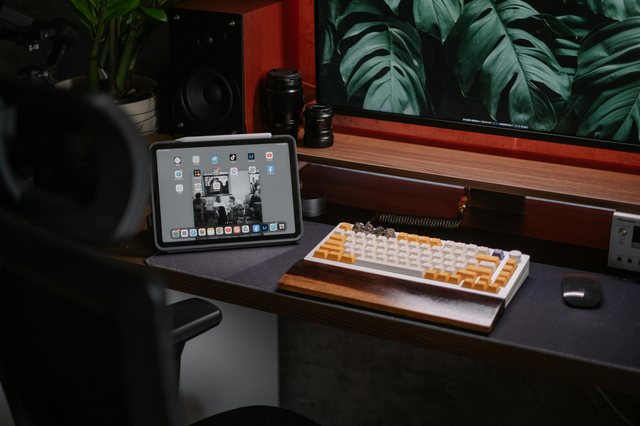
For office use, quieter linear switches, silent tactile switches, foam-dampened cases, and softer keycaps can make a big difference. You can still get the mechanical keyboard feel without making everyone around you suffer.
This is also why trying a keyboard before buying matters. A keyboard that sounds good in a YouTube video may not sound the same in real life. The microphone, room, desk mat, table, camera setup, and editing can all affect the sound.
The real test is still your own fingers and your own ears.
The UAE problem
This brings me to the biggest frustration I had when trying to buy a mechanical keyboard in the UAE.
The market exists. The interest exists. The products exist globally. However, the buying experience locally still feels incomplete.
[image here: person browsing mechanical keyboards online in the UAE with product pages open]
You can find gaming keyboards from big brands. You can find keyboards with RGB lighting, aggressive designs, and packaging that looks like it was made for a gaming tournament. Some of those keyboards are genuinely good, but they are not always the same as buying from a specialized keyboard brand or building a keyboard around your own preferences.
If you want to experience the difference between switches, sound profiles, layouts, keycap materials, and actual typing feel, the options become limited very quickly.
The enthusiast side of mechanical keyboards is not only about buying a keyboard. It is about understanding what kind of keyboard suits you.
Do you want a full-size keyboard or a 75% layout?
Do you want linear or tactile switches?
Do you want something quiet or loud?
Do you want a keyboard for gaming, work, typing, or all of them?
Do you want something ready-made, or do you want something you can customize over time?
[image here: several keyboard layouts placed side by side, such as full-size, TKL, 75%, and 60%]
These are hard questions to answer from product photos.
A keyboard can look premium online and still feel disappointing in person. Another keyboard may look simple in photos but feel excellent when you type on it. This is why the buying experience matters so much.
And this is the gap Clackery wants to solve.
So, are mechanical keyboards worth it?
The honest answer is that it depends.
If you only need a keyboard to type a few emails and search for things occasionally, you probably do not need a mechanical keyboard. If you want the cheapest possible option, a regular keyboard makes more sense. If you work in a very quiet shared office, you should be careful about which mechanical keyboard you choose.
However, if you type every day, game regularly, care about your desk setup, or enjoy products that can be tuned to your personal preference, a mechanical keyboard is worth considering.
[image here: close-up of hands typing on a clean mechanical keyboard setup]
A mechanical keyboard is not better for every single person, but it does make sense for people who care about how typing feels. It gives you more control over the feel, sound, layout, and appearance of one of the most used objects on your desk.
That is why mechanical keyboards have become popular. They take something ordinary and make it more personal, more enjoyable, and more customizable.
For me, that is the appeal. I do not think everyone needs a mechanical keyboard, but I do think more people should get the chance to experience one properly before deciding.
That is why Clackery exists.